Ropes are used across marine, agricultural, industrial, decorative, recreational, and general-purpose applications. However, choosing the right rope requires more than simply looking at its strength. Material, flexibility, moisture resistance, durability, handling, and intended use all influence performance.
The two main categories are natural fiber ropes and synthetic ropes. Natural ropes are made from materials such as hemp, jute, sisal, cotton, and coir, while synthetic ropes are manufactured from materials such as nylon, polyester, and polypropylene. Understanding the differences helps you choose a rope that matches your specific requirements.
Table of Contents
What Are Natural Fiber Ropes?
Natural fiber ropes are made from plant-based materials. Hemp, jute, sisal, cotton, and coir have traditionally been used to manufacture rope for a variety of applications.
One of their main advantages is their natural appearance and textured surface. This makes them popular for decorative projects, crafts, landscaping, interior design, and selected agricultural applications. Natural fiber ropes can also be biodegradable, depending on the material and any treatments applied.
However, natural fibers can absorb moisture and may be more susceptible to mildew, rot, and degradation in prolonged damp conditions. Proper storage and maintenance are therefore important, particularly when these ropes are used outdoors.
What Are Synthetic Ropes?
Synthetic ropes are manufactured from man-made fibers, including nylon, polyester, and polypropylene. Engineers can tailor these materials to provide different combinations of strength, flexibility, abrasion resistance, moisture resistance, and stretch.
Synthetic ropes are widely used in marine, industrial, outdoor, utility, and recreational applications. Their performance varies by material. For example, nylon rope is known for its elasticity and shock absorption, while polyester generally offers lower stretch and good resistance to outdoor exposure. Polypropylene is lightweight and absorbs very little water.
Because each synthetic material has different characteristics, choose the right rope based on the application, not material type alone.
Natural Fiber vs. Synthetic Rope: Key Differences
| Feature | Natural Fiber Rope | Synthetic Rope |
| Material | Plant-based fibers | Man-made fibers |
| Appearance | Natural and traditional | Uniform and technical |
| Grip | Generally textured | Varies by construction |
| Moisture resistance | Generally lower | Often higher |
| Outdoor durability | Requires more care | Varies by material |
| Stretch | Depends on fiber | Varies by material |
| Biodegradability | Generally higher | Generally lower |
| Common uses | Decorative, craft, agricultural | Marine, industrial, outdoor |
These are general characteristics. Actual rope performance depends on the specific material, construction, diameter, treatment, and manufacturer specifications.
Strength and Durability
A common question is whether natural or synthetic rope is stronger. In many applications, synthetic ropes offer a higher strength-to-weight ratio, but strength varies widely by material and construction.
Synthetic options such as nylon and polyester are available in configurations designed for demanding applications. Natural fiber ropes can also provide useful strength when properly selected for suitable tasks.
For lifting, towing, securing, or other load-bearing applications, always review the manufacturer’s specifications, working load limits, construction, and safety requirements rather than relying on general descriptions such as “heavy-duty” or “durable rope.”

Shop Rope for Your Project
Explore RopeHub for natural fiber and synthetic ropes designed for marine, industrial, outdoor, utility, decorative, and general-purpose applications. Choose the right material and construction based on your project’s specific needs.
Weather and Moisture Resistance
Environmental conditions can significantly affect rope performance.
Natural fiber ropes can absorb water, and prolonged moisture exposure may contribute to mildew, rot, and material degradation. They are therefore generally better suited to applications where you can control exposure.
Synthetic ropes are often chosen for outdoor and marine applications because many synthetic materials resist moisture and environmental conditions better. However, UV and chemical resistance vary by material, so consider the specific product’s specifications.
Best Uses for Natural Fiber Rope
Natural fiber rope can be a good option when appearance, texture, renewable materials, or traditional styling are important.
Common applications include:
- Interior and exterior decorative projects
- Landscaping and gardening
- Macramé and crafts
- Rustic or nautical décor
- Selected agricultural tasks
- Traditional or decorative installations
For these applications, materials such as hemp, jute, cotton, and sisal can provide distinctive textures and appearances.
Best Uses for Synthetic Rope
People often choose synthetic rope when an application requires greater resistance to moisture, repeated use, or demanding outdoor conditions.
Typical applications include:
- Marine and boating
- Industrial and utility work
- Towing and securing
- Outdoor equipment
- Camping and recreational gear
- General-purpose applications
The right synthetic material depends on your specific needs. Choose nylon when elasticity and shock absorption matter, and polyester when lower stretch and outdoor resistance matter more.
Twisted Nylon Rope
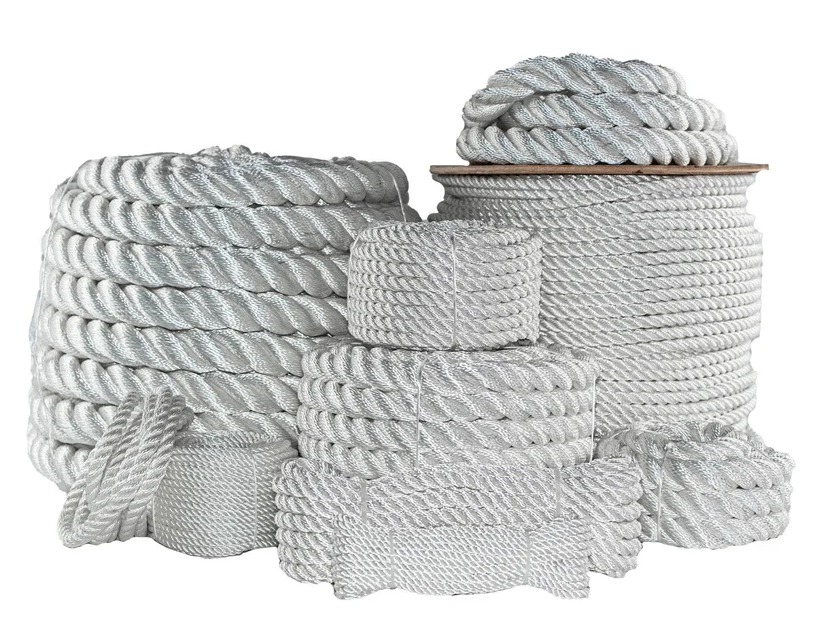
This heavy-duty twisted nylon rope delivers dependable strength, flexibility, and all-weather performance. Its durable nylon construction resists abrasion, moisture, and outdoor conditions, making it a reliable option for demanding utility and outdoor applications. The rope’s twisted construction also offers good flexibility and handling, making it easy to work with across a variety of projects.
Twisted nylon rope suits applications where strength and durability matter, including marine use, boating, towing, tie-downs, utility work, camping, landscaping, and general outdoor tasks. Available in multiple diameters, it lets users choose the right size for their project. The white finish provides a clean, versatile appearance for both functional and outdoor setups.
Key Features:
- Heavy-duty twisted nylon construction for strength and long-lasting performance.
- All-weather design suitable for a variety of indoor and outdoor applications.
- Abrasion-resistant construction for dependable performance during regular use.
- Moisture-resistant nylon material suitable for marine and outdoor environments.
- Flexible and easy to handle, making it practical for everyday rope applications.
- Versatile performance for boating, towing, camping, utility work, landscaping, and general outdoor use.
- Available in multiple diameters to accommodate different project requirements.
- The white color provides a clean, versatile appearance.
Specifications:
- Diameters Available: 1/4″, 3/8″, 1/2″, 5/8″, 3/4″, 1″, 1-1/4″, 1-1/2″, and 2″
- Lengths Available: By the foot, with the desired length selected through quantity
- Color: White
- Rope Construction: Twisted nylon
- Performance: Designed for strength, flexibility, abrasion resistance, and all-weather use
- Common Applications: Marine and boating use, towing, tie-downs, camping, landscaping, utility work, and outdoor projects
How to Choose the Right Rope
The right rope depends on the conditions you will use it in. Before purchasing, consider:
- Application: Determine whether you need the rope for decoration, agriculture, marine use, industrial work, recreation, or another purpose.
- Environment: Consider exposure to water, sunlight, chemicals, abrasion, and temperature.
- Strength: Check the manufacturer’s rated capacity and specifications for load-bearing applications.
- Stretch: Determine whether elasticity or lower stretch is more suitable for the task.
- Maintenance: Consider whether the rope needs extra protection or storage precautions.
- Material: Compare the benefits and limitations of natural fibers and specific synthetic materials.

Frequently Asked Questions
Which rope lasts longer, natural or synthetic?
Synthetic ropes often last longer in wet or outdoor environments because many synthetic materials resist moisture, rot, and environmental exposure better. Actual lifespan depends on the material, construction, use, and maintenance.
Are natural fiber ropes eco-friendly?
Natural fiber ropes are generally more biodegradable than synthetic alternatives and are made from plant-derived materials. However, their overall environmental impact depends on how the fibers are produced, treated, used, and disposed of.
What is the most durable rope for marine use?
No single rope is best for every marine application. Nylon, polyester, and polypropylene have different properties, so the appropriate choice depends on factors such as stretch, strength, water exposure, abrasion, and the intended marine use.
Can natural fiber rope be used outdoors?
Yes, natural fiber rope can be used outdoors for suitable applications. However, prolonged exposure to moisture and other environmental conditions can shorten its service life, making proper storage and maintenance important.
Conclusion
Both natural fiber and synthetic ropes have specific advantages. Natural fiber ropes suit applications where natural appearance, texture, and biodegradability matter. Synthetic ropes offer a broader range of engineered performance characteristics for marine, industrial, outdoor, and utility applications.
Instead of choosing a rope simply because it is described as durable, consider the material, construction, environment, strength requirements, flexibility, and intended use. Selecting a rope according to these factors can help ensure better performance and suitability for the job.


